
What happens at the end
Kitai reaches the ship’s tail section and finds that the escaped Ursa has killed the rest of the crew. Worse, the emergency beacon fails: the atmosphere is blocking its signal.
To get above it, Kitai climbs a volcano. At the top, the Ursa finds him. He finally manages ghosting, the fear-suppressing technique his father invented, and kills it.
He activates the beacon. A rescue team arrives and takes Kitai and Cypher back to Nova Prime.
What it means
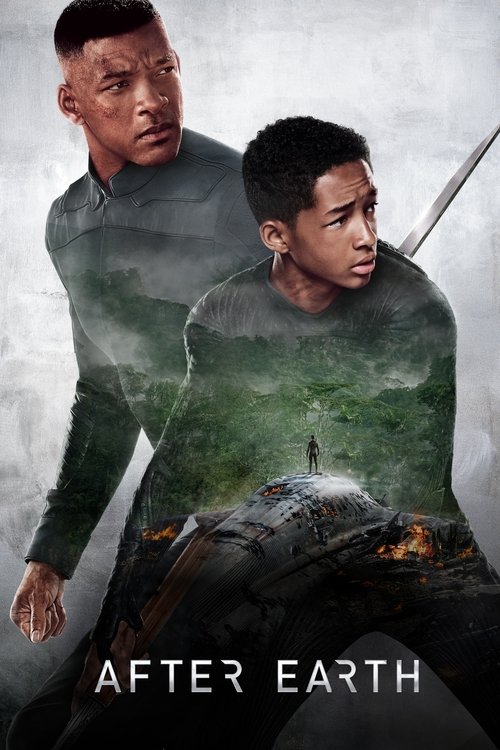
Fear is the enemy. The Ursas hunt by sensing fear. As the film’s poster put it, “danger is real, but fear is a choice.” Kitai’s journey is about learning that choice.
A son growing up. Kitai blames himself for the death of his sister, Senshi, in an Ursa attack, and he’s been rejected by the Rangers he wants to join. He disobeys his father’s order to turn back and jumps anyway. Matt Zoller Seitz at RogerEbert.com wrote that “parent and child must ultimately separate because it’s the only way to re-create themselves as equals,” and pointed out the film’s lesson isn’t simple obedience: sometimes you have to disobey orders.
A father learning, too. Cypher, who invented ghosting, can only talk his son through it from the wreck, until even that link is lost when the eagle damages Kitai’s communicator. The ending works only once Kitai is on his own.
Clues you missed
- Ghosting. Cypher explains how he developed it while Kitai shelters from a thermal shift. That conversation is the instruction manual for the climax.
- The Ursa on board. The ship is carrying a live, restrained Ursa when it crashes. It’s the threat waiting at the end of Kitai’s route.
- The eagle. The giant eagle that carries Kitai off later shelters him from a thermal shift and dies doing it. It’s the film’s picture of protecting someone at any cost.
- The atmosphere. The beacon failing at the tail section isn’t a dead end. It’s why the final fight has to happen on a volcano.
How it was made
Will Smith’s story. Smith came up with the idea while watching the survival series I Shouldn’t Be Alive. It started as a contemporary story about a father and son in a car crash in remote mountains, and Smith moved it a thousand years into the future.
Night’s part. Smith approached Night in 2010. Night co-wrote the screenplay with Gary Whitta, directed and co-produced. The marketing barely mentioned his name, which Forbes‘s Scott Mendelson criticized.
A planned trilogy. It was intended as the first of three films.
Where fans disagree
- Is it any good? The Rotten Tomatoes consensus calls it “a dull, ploddingly paced exercise in sentimental sci-fi.” Seitz gave it 3.5 stars and called it “spectacular and wise.” The Guardian‘s Peter Bradshaw gave it one.
- Scientology? Some critics, including Manohla Dargis of The New York Times, saw parallels to Scientology teachings. Carnegie Mellon researcher David S. Touretzky, a Scientology critic, said, “I don’t see any Scientology content at all in this movie.”
- Nepotism. Critics took aim at casting Will Smith’s son Jaden as the lead. In 2015, Will Smith called the film “the most painful failure” of his career.
Sources
- After EarthWikipedia (plot, production, reception)
- After Earth reviewMatt Zoller Seitz, RogerEbert.com, 2013