
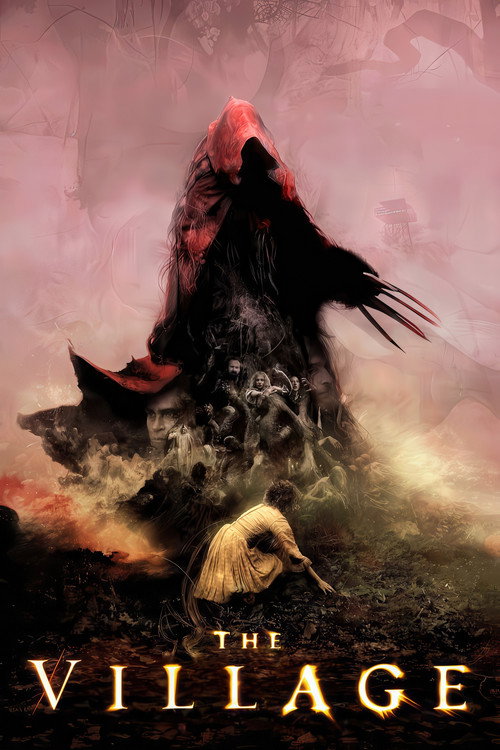
What happens at the end
After Noah stabs Lucius, Edward breaks with the other elders and sends Ivy through the woods for medicine. Before she goes, he tells her the truth: the creatures are the elders in disguise. The two young men sent with her lose their nerve and leave her. A creature stalks her anyway, and she leads it into a deep hole, where it falls to its death. It was Noah, in a costume he’d found hidden under the floorboards.
Meanwhile, Edward and his wife open their black box. Inside are photos of the elders when they were young, standing outside a modern counseling center. The story isn’t set in the 19th century at all.
Ivy climbs a high wall and meets Kevin, a park ranger at the Walker Wildlife Reserve, who can’t believe she came out of the woods. He gets the medicine on her list without telling his supervisor about her.
Edward, a former history professor, founded the village more than two decades earlier with people from the grief clinic. His family fortune paid for the reserve, built the village inside it and paid the government to make it a no-fly zone.
Ivy comes home with the medicine. The elders gather by Lucius’s bed, and they choose to keep going as before. Ivy’s last line: “I’m back, Lucius.”
What it means
A village built out of grief. Every elder came there after losing someone. Edward tells Ivy that “there is no one in this village who has not lost someone irreplaceable.” The village was supposed to keep that kind of loss out. The film opens with a child’s funeral, and as The A.V. Club puts it, “no matter where you go, you take your trauma with you.”
Innocence at any price. Edward defends sending Ivy by saying that if they didn’t, “we could never again call ourselves innocent, and that in the end is what we have protected here, innocence!” The irony is that keeping that innocence takes lies, costumes, a dead boy and a fortune from the very world they left.
Fear as a fence. The monsters were invented to keep the children from wanting to leave. Looper reads the ending as being about a longing for an idealized past that never existed, and The A.V. Club reads the creatures as fear used for control.
The choice at the end. Night has said the elders’ decision to carry on was the heart of it: “That kind of tableau of them standing at the end and making the decision where they’re all like, ‘It’s worth it for this.’” Whether that’s tender or chilling is the film’s real question.
Clues you missed
- The towns. The elders call them wicked and refuse to let anyone go, even for medicine.
- The black boxes. Every elder keeps one locked. They hold mementos of the lives the elders left behind.
- The family money. Edward tells Ivy about her grandfather, “the wealthiest man in the towns,” and how he was murdered. That fortune is what pays for the whole reserve.
- The elders’ talk of innocence. Looper points out that their speeches about gratitude, manners and protecting innocence only make sense after the twist.
- The color red. Red is banned because it supposedly attracts the creatures, and the color shows up anyway, as Ivy’s berries and as the red paint left on doors.
- The opening funeral. The A.V. Club notes it carries extra weight once you know who these people are and why they came.
What Night has said
He shot a different ending. On CinemaBlend’s ReelBlend podcast in 2024, Night described it: “Basically, (Ivy) came out, and everyone found out about the place, and it basically blows up.” A car nearly hits her. The driver, he said, “was me by the way,” and he was listening to Jay-Z’s “99 Problems.” His verdict: “the value system just goes flip at the end.”
Why he cut it. “It’s so provocative. It was so polarizing, because people got offended,” he said. “Immediately you went from ‘Little House on the Prairie’ to Jay-Z.” He kept it off the Blu-ray because “you would change your memory of the movie so much.”
Why he kept the ending he did. “The idea of the way it is now, where they make a decision to continue this way of life, was really powerful and poignant,” he said. “I mean, we’d all want that for our kids. If we could make a world where we think they’re safer.”
The cut ending fits an earlier report: Wikipedia notes that several lead actors were called back in the spring of 2004, reportedly because the ending had changed, and that a script stolen before release ended with Ivy getting help from a truck driver.
Where fans disagree
- Were the elders right? Night calls their choice poignant. Critics have called it a patriarchal fantasy (The A.V. Club) and a refusal to face reality (Looper).
- Why send Ivy? The A.V. Club asks why a blind young woman, rather than an elder who knew the truth, makes the journey. Edward’s answer in the film: “She is led by love.”
- How long can it last? Looper reads the elders’ exhaustion as a sign that the lie can’t hold forever.
- Was the twist worth it? Roger Ebert called it “a crummy secret.” IGN’s Carlos Morales argued the film was mismarketed as horror and misunderstood. The Daily Telegraph’s Philip Horne called it an “allegory of American soul-searching” that “seems to have been widely misunderstood.”
- Where did the idea come from? The publisher of Margaret Peterson Haddix’s 1995 novel Running Out of Time, also about a 19th-century village that turns out to be a modern park, claimed the film took ideas from it. No lawsuit was filed.
Sources
- The Village (2004 film)Wikipedia (plot, production, reception, the Running Out of Time claim)
- The Village quotesMNight.com, from Wikiquote (dialogue)
- M. Night Shyamalan on the provocative alternate ending of The VillageSean O’Connell, CinemaBlend, Aug. 13, 2024
- Missing the forest for the twist: Revisiting The Village at 20Cindy White, The A.V. Club, Aug. 8, 2024
- The Ending Of The Village ExplainedLeo Noboru Lima, Looper, Nov. 22, 2023